
New Zealand
Below are supplementary articles about my time in New Zealand that do not strictly fit in the Features section. These articles include a summary of my itinerary and an article about the endangered and endemic tuatara. A complete understanding of ecotourism as a conservation strategy necessitates an understanding of ecology and the environment.
Trip Itinerary & Relevant Links
In total, I spent two weeks in New Zealand traveling around the North and South Islands. On the North Island, I visited Poor Knights Islands, Hobbiton, the Waitomo glowworm caves, Rotorua, Tongariro, and Wellington. On the South Island, I visited Dunedin, Milford Sound, and Queenstown. Click on the link below for a more in depth itinerary and links to businesses and experiences.
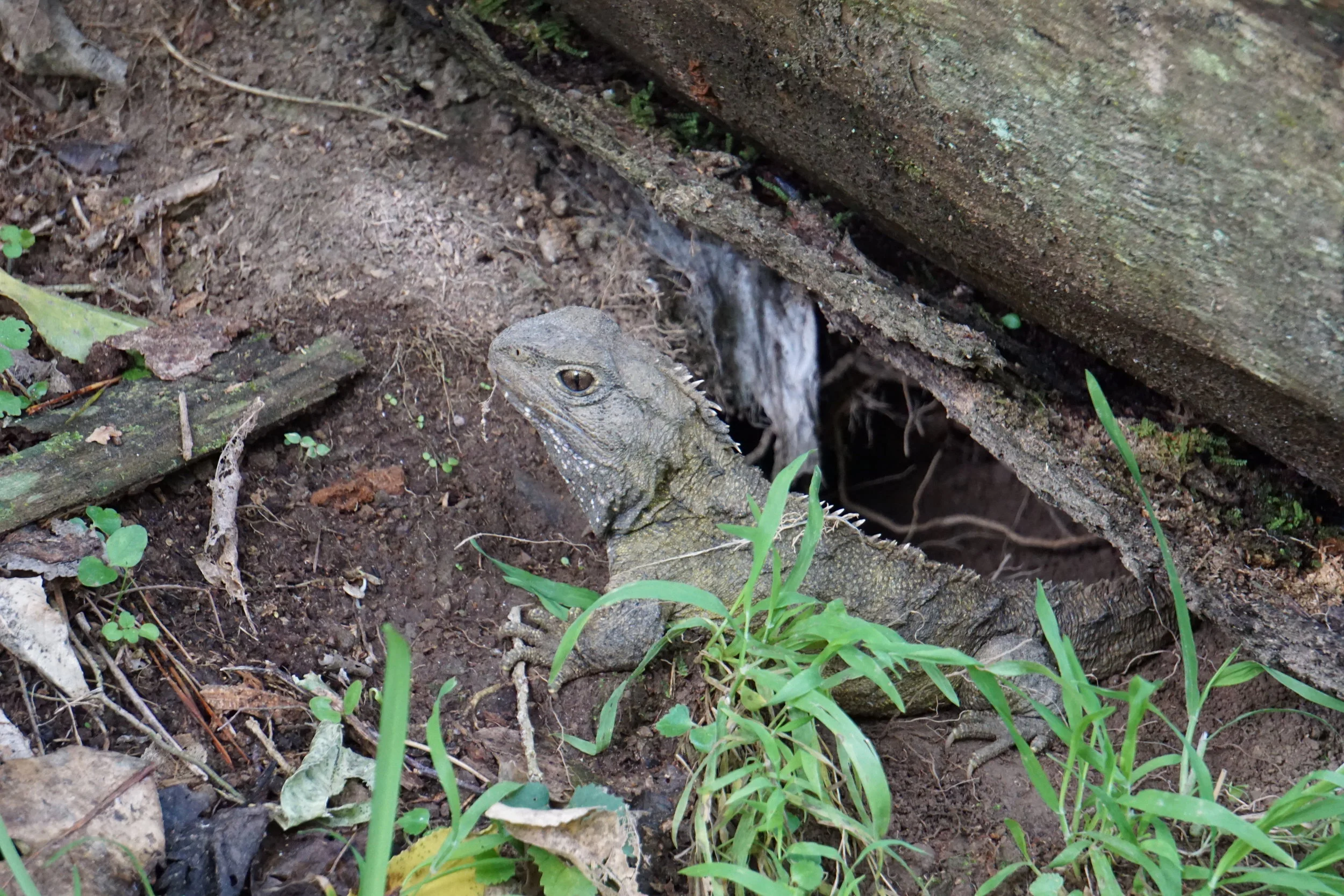
I took this photo of a tuatara at Zealandia in Wellington, NZ. According to the nature guide at the park, this is an adult male tuatara who came out to sunbathe. Despite a very active tuatara population in the ecosanctuary, it is rare to see one during the day.
A Tuatara’s Story
The tuatara is often referred to as a living dinosaur or living fossil. While the tuatara is not the oldest living species of vertebrate, it is one of the oldest living species of tetrapods and is the only extant member of the order Rhynchocephalia. Despite its outward appearance, this reptile is not a lizard. The tuatara is an endangered and important part of earth's ecological history.